Broccoli Purée for Babies
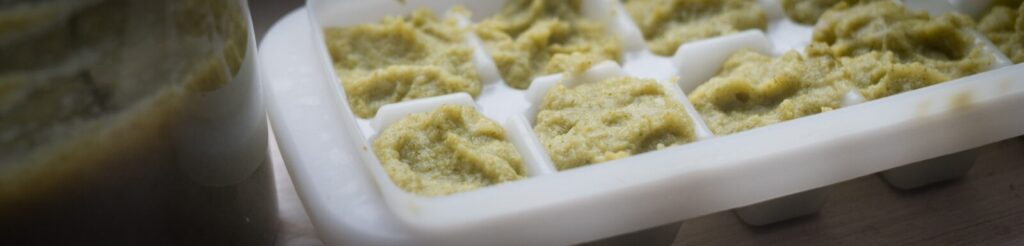
Introducing a baby to their first solid foods can be both exciting and a bit overwhelming. It helps to approach the process calmly—give both yourself and your child time to adjust to this new stage. To make daily life easier, it’s worth preparing purées in bigger quantities and freezing them. A standard ice cube tray works perfectly for this: each compartment holds about a tablespoon, making it easy to portion meals later. Frozen this way, the purée retains its nutrients, and you can defrost just what you need. Once your baby is familiar with several vegetables, you can also mix flavors—for example, combining broccoli, carrot, and pumpkin cubes into a blended vegetable purée.
This same method works for nearly all vegetables: cook or steam, blend, and add a little cooking water if needed to reach the right texture. For a baby’s first foods, it’s best to keep things simple—no seasoning, and no added fats before freezing. Prepare and freeze each vegetable on its own, then mix them later if you like. You can add a small amount of healthy fat only when reheating and serving.
For warming the food, a gentle water bath is ideal. Place the purée in a small covered bowl, then set it inside a larger bowl filled with hot water. It takes a bit longer than using a microwave, but helps preserve more of the vitamins and nutrients.
Some parents worry that broccoli might cause gas, but in practice it’s generally easy for babies to digest and packed with beneficial nutrients. Steaming is the best method to preserve vitamins, though boiling works just fine if needed. Broccoli is rich in vitamin C (a 100 g portion covers daily needs), as well as vitamin K, minerals, and beta-carotene—all valuable for a growing baby.
- 1 head of broccoli
- water (for boiling)
- 1 Wash and cut the broccoli into small pieces. Place them in a pot and add enough water to fully cover. Bring to a boil and cook until the broccoli is soft.
- 2
Drain the broccoli, reserving the cooking water. Return the broccoli to the pot and add about 100 ml of the reserved liquid. Blend until smooth using a hand blender, adding more liquid a tablespoon at a time if needed. The consistency should be soft and smooth, not too thick but not overly runny either.- 3
Let the purée cool to room temperature, then spoon it into an ice cube tray in small portions and freeze. Once frozen, transfer the cubes into a sealed freezer bag for easy storage.NoteTip: If you have a steamer, use it whenever possible. Steaming keeps temperatures lower than boiling, helping preserve heat-sensitive vitamins that might otherwise be lost.
for babies, baby, broccoli - 2